


Searching for an infrastructure partner can mean hours of discovery calls, technical meetings, proposal reviews, and internal discussions, sometimes with companies you eventually realize should never have made the shortlist.
It doesn’t help that provider websites often look remarkably similar. Many firms list the same technologies and promises, while giving you much less information about who will actually do the work, how they diagnose problems, or what happens after the engagement ends.
So we compared the factors that are harder and more important to evaluate. Specifically, we looked at:
Here are the top 7 best cloud infrastructure automation services we’ve identified based on diagnostic capability, implementation depth, engineer seniority, time to outcome, automation breadth, business focus, and knowledge transfer:
- Pelotech: Best for teams requiring expert-led diagnosis and automation.
- Infracloud: Best for Cloud-native teams that need Kubernetes, GitOps, and DevOps implementation support.
- Squareops: Best for teams that want automation plus ongoing DevOps support.
- AppsCode: Best for Kubernetes-focused teams that want the option of ongoing managed cloud support.
- CloudStackers: Best for startups and mid-sized teams that want automation built and handed over.
- CodetoKloud: Best for regulated companies that need AWS infrastructure automation with security and compliance built in.
- SourceMash: Best for Enterprises wanting DevOps alongside ERP, CRM, and data work.
1. Pelotech
Best fit: Teams requiring expert-led diagnosis and automation.
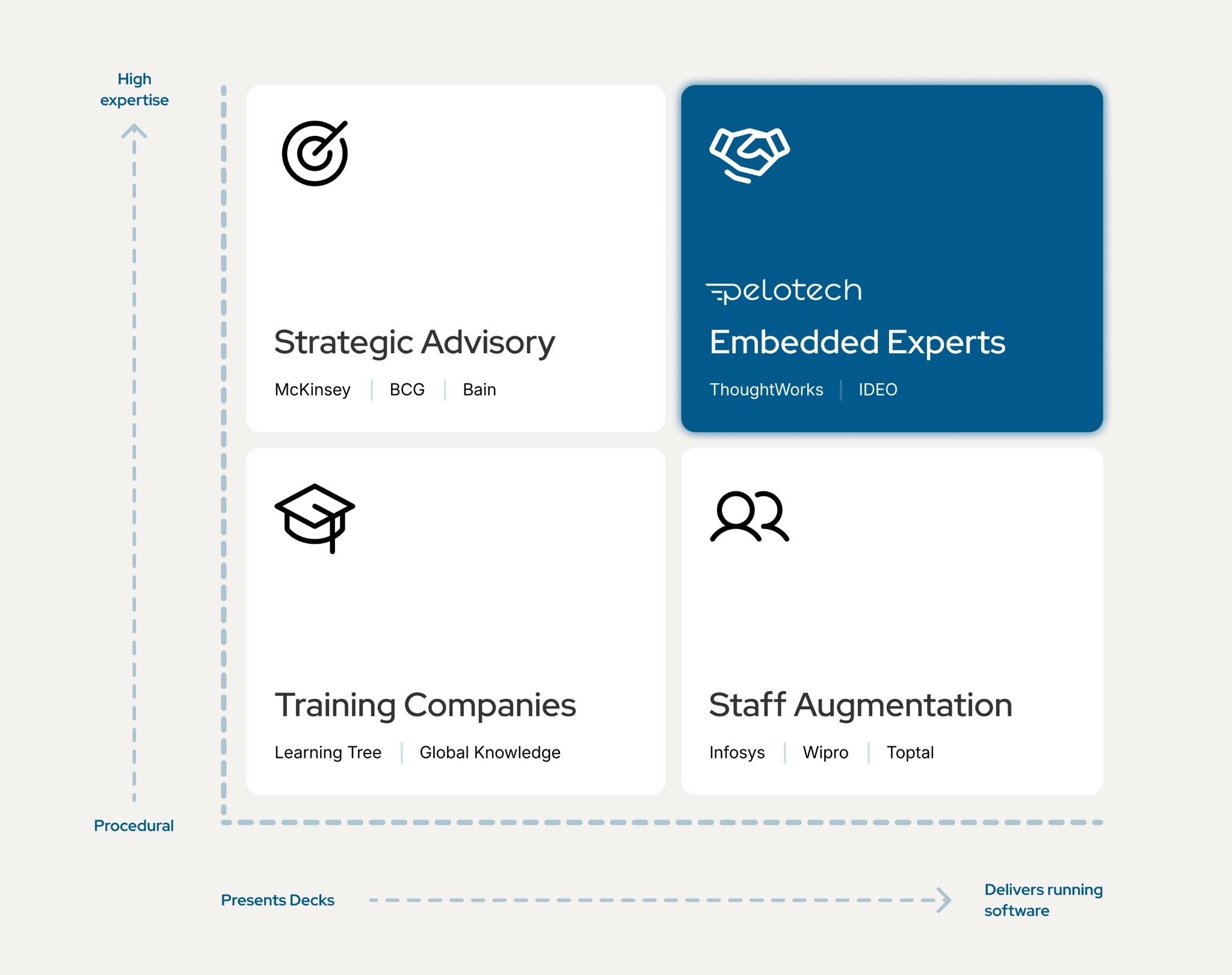
Pelotech is an engineering consultancy with senior engineers with experience in Kubernetes, AWS, Infrastructure as Code, and GitOps. Through our DevOps automation service, we help organizations ranging from SaaS scale-ups to regulated, government-adjacent organisations design and build automated cloud infrastructures.
What sets Pelotech apart is its diagnostic-first approach.
Rather than treating every automation request as a build order, our engineers first determine whether automation is the right fix. We know from experience that applying automation to underlying issues such as poor architecture, unclear ownership, or partial workarounds already stretched past their limits creates issues that are harder to undo.
To make this diagnostic approach work, we hire only senior engineers to handle both diagnosis and implementation. Whatever they find determines the next step, which may not involve automating the system at all.
That way, you get automation that reduces manual work and operating costs without adding unnecessary complexity or multiplying already existing issues
Recently, we used this same approach to automate Quantum Interface’s AWS GovCloud environment with Terraform, GitOps, and continuous compliance monitoring. Today, its small engineering team runs enterprise-grade infrastructure with no dedicated AWS administrators, no long-lived credentials, and minimal ongoing operational overhead.
Or keep reading to see how we identify what to automate and keep your team in control.
Get an automation approach that serves your needs
Some vendors approach automation with a predetermined stack in mind. So the automated setup doesn’t solve the issues at hand, but instead multiplies them or adds new ones.
Pelotech avoids this by basing tool choice entirely on findings from the diagnosis. The team first understands what your infrastructure needs to accomplish, then decides which tools and modernization strategies are appropriate.
With this approach, we deliver cloud automations that produce real business outcomes, such as reducing operating costs, removing manual work, improving delivery speed, and making infrastructure easier to run.
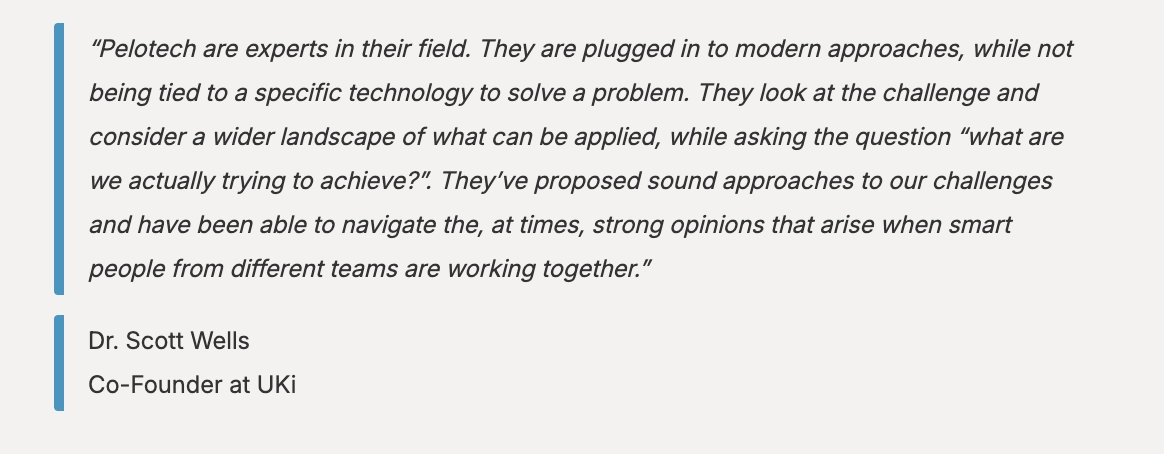
Our Ultimate Knowledge Institute engagement, for example, resulted in 2–3x faster progress toward target goals, $500,000 in annual savings, and a 50% reduction in manual work.
Work directly with senior engineers who design and implement the solution
At Pelotech, senior engineers lead the introductory call and also write Terraform modules, design CI/CD architecture, and build GitOps workflows. We use this approach because, from our experience on the other side of the transaction, outsourcing projects to junior engineers or offshore delivery teams after the contract is signed, or leaving the introductory call to the sales team, creates big issues:
- Context gets lost between sales and delivery.
- The client ends up making the architectural decisions.
- Time zones and fragmented teams slow communication.
- Larger teams can introduce duplicate work and unnecessary complexity.
- You spend more time managing the vendor.
The introductory call also gives our senior engineers a chance to pull apart your architecture and determine what really needs automation.
Throughout the engagement, those senior engineers work directly with your team day to day, often becoming so embedded in your workflow that they feel like part of the internal team rather than outside contractors.
That means we don’t just deliver the automation. We can also help your team improve how it organizes work, tests changes, releases software, and sets priorities.
Get infrastructure automation delivered up to 5x faster
Rework is a major source of delay in cloud infrastructure automation projects. Teams often discover problems only after something breaks in production or after the build is finished, forcing them to go back, diagnose the issue, and redo earlier work.
Our diagnostic-first approach reduces that rework. Because our senior engineers assess the existing infrastructure and map its dependencies before writing a single line of code, we can catch problems likely to cause rework during the 1–2 week diagnosis phase. Implementation then takes 2–4 months, followed by 2–4 weeks of knowledge transfer.
This cuts our DevOps automation engagements to three to five months, after which you get fully functional, automated cloud infrastructure, and you start seeing a working infrastructure during the project.
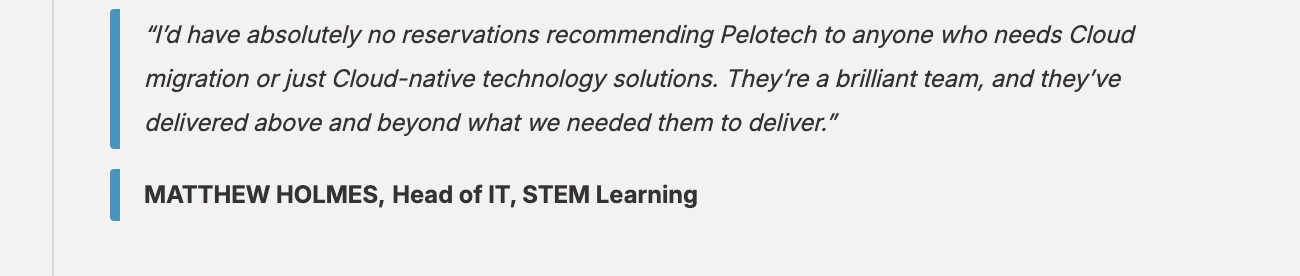
For example, we migrated STEM Learning from an on-prem system to AWS in under three months, with a proof of concept in three weeks and staging ready by week seven. In the words of Matthew Holmes, Head of IT, STEM Learning:
d. Gain full ownership of your infrastructure after the engagement ends
Our end goal is to give you a cloud infrastructure you can manage quite easily on your own, instead of forcing you into a lifetime of reliance on us. This keeps to our principle that a work is never finished until the client’s team can explain, modify, and recover the system without Pelotech.
To that end, we embed engineers with your team throughout implementation and document the architectural decisions and the rationale behind them. In the final phase, we run hands-on knowledge transfer sessions where our engineers work through the system directly with yours, alongside architecture decision records and runbook reviews.
Once the engagement ends, you take full control of the infrastructure.
Want cloud infrastructure your team can run without depending on a consultancy? Book a consultation with Pelotech.
Where Pelotech isn’t the right fit
We serve a specific set of companies who prefer to automate the right things and get a cloud infrastructure that works reliably, rather than pay more for a rework later. Specifically, Pelotech won’t be the right fit if you:
- Have already decided what to build and don’t want to validate the architecture. In that case, a staff augmentation team that simply executes the plan may be a better fit.
- Are choosing mainly on hourly rate. Instead of outsourcing projects to 20 low-cost engineers, Pelotech uses small teams of senior engineers to reduce rework, avoid expensive infrastructure decisions, and reach the outcome faster.
- Want a vendor that follows the brief without questioning it. Pelotech assesses the problem first and recommends a different approach (or no automation at all) if it better solves the underlying issue.
2. InfraCloud
Best for: Cloud-native teams that need Kubernetes, GitOps, and DevOps implementation support.
.webp)
InfraCloud is a cloud-native engineering consultancy that works across Kubernetes, GitOps, CI/CD, DevOps tooling, and observability. Their recent merger makes them the largest provider on this list.
Every engagement starts with an assessment.
For Kubernetes projects, InfraCloud reviews your infrastructure and application readiness before creating an implementation roadmap. Its GitOps consultants compare your current deployment process against GitOps practices, while its DevOps toolchain team looks for bottlenecks and identifies which tools or processes need improvement. InfraCloud can then handle the implementation itself.
You can also choose what happens after implementation. InfraCloud offers training to help your engineers manage the new setup themselves, or you can keep its team involved through managed DevOps, Kubernetes support, GitOps support, and observability services.
Where it may be less suitable: InfraCloud covers a very wide range of cloud-native services, from Kubernetes and GitOps to CI/CD, observability, and managed DevOps. That breadth is useful if you already know which area you need help with, but it can also make the offering feel less focused if your main problem is still unclear. The company’s size may also mean senior engineers aren't fully involved in every engagement.
3. SquareOps
Best fit: Teams that want automation plus ongoing DevOps support.
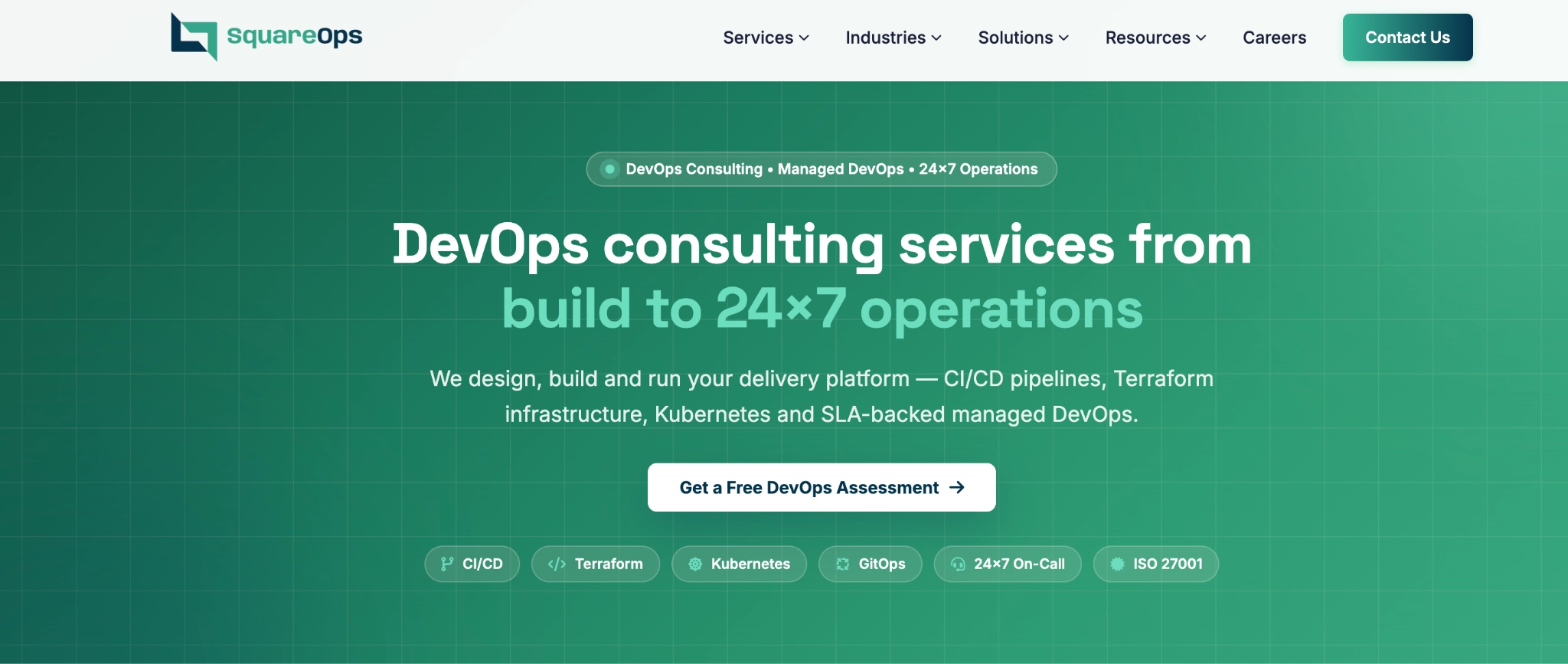
SquareOps provides end-to-end DevOps and cloud-native services. It works across AWS, GCP, and Azure and supports both one-off implementation projects and longer-term managed DevOps engagements.
Most DevOps engagements start with a one- to two-week assessment of existing pipelines and infrastructure. SquareOps then produces a baseline, identifies risks, and creates a prioritized implementation roadmap. From there, its engineers can build the missing pieces, such as Terraform infrastructure, CI/CD pipelines, Kubernetes clusters, GitOps workflows with ArgoCD or Flux, and automated security checks.
One of SquareOps’ biggest strengths is how far it supports teams after the implementation.
Companies can stop after the project and operate the infrastructure themselves, or retain SquareOps for monitoring, patching, releases, incident response, disaster recovery, FinOps reviews, and 24/7 on-call support.
Where it may be less suitable: SquareOps offering also leans heavily into ongoing operational support, although SquareOps makes clear that managed operations are optional and clients can take the completed system in-house.
4. AppsCode
Best fit: Kubernetes-focused teams that want the option of ongoing managed cloud support.
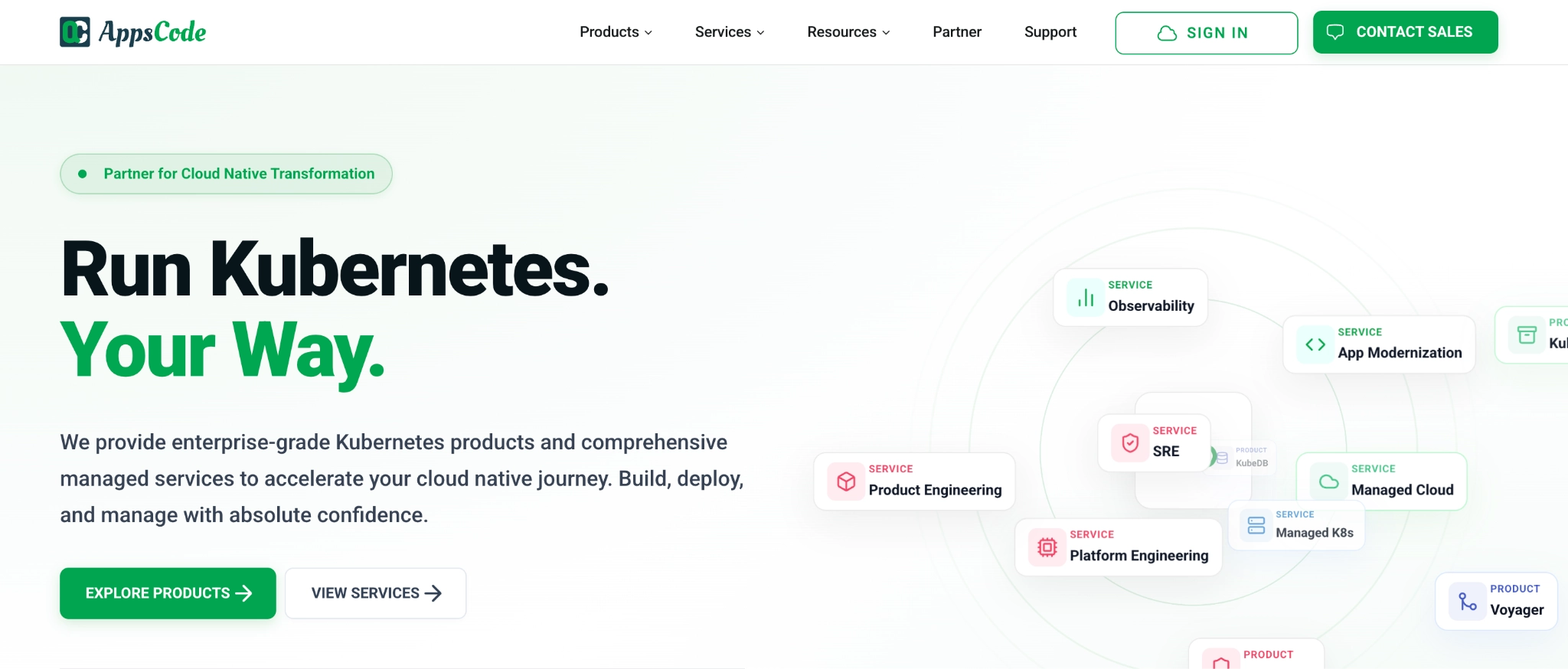
AppsCode is a cloud-native engineering company focused heavily on Kubernetes. It also builds its own Kubernetes products, including KubeDB, KubeVault, KubeStash, and Voyager.
For automation projects and CI/CD implementations, AppsCode does more than install tools. Its GitOps engagements start with a review of existing CI/CD pipelines and an assessment of whether the infrastructure is ready for tools. The team then creates a roadmap, selects the appropriate tools, and handles implementation.
AppsCode also offers a managed service that includes 24/7 monitoring, tool updates, optimization, and support for multi-cluster environments. Teams that prefer to take over can instead use its hands-on GitOps and CI/CD training to build internal expertise.
Where it may be less suitable: AppsCode focuses heavily on Kubernetes and also sells its own Kubernetes products. That makes it convenient if you want one vendor for both software and implementation, but less ideal if you want completely product-neutral recommendations.
5. CloudStackers
Best fit: Startups and mid-sized teams that want automation built and handed over.
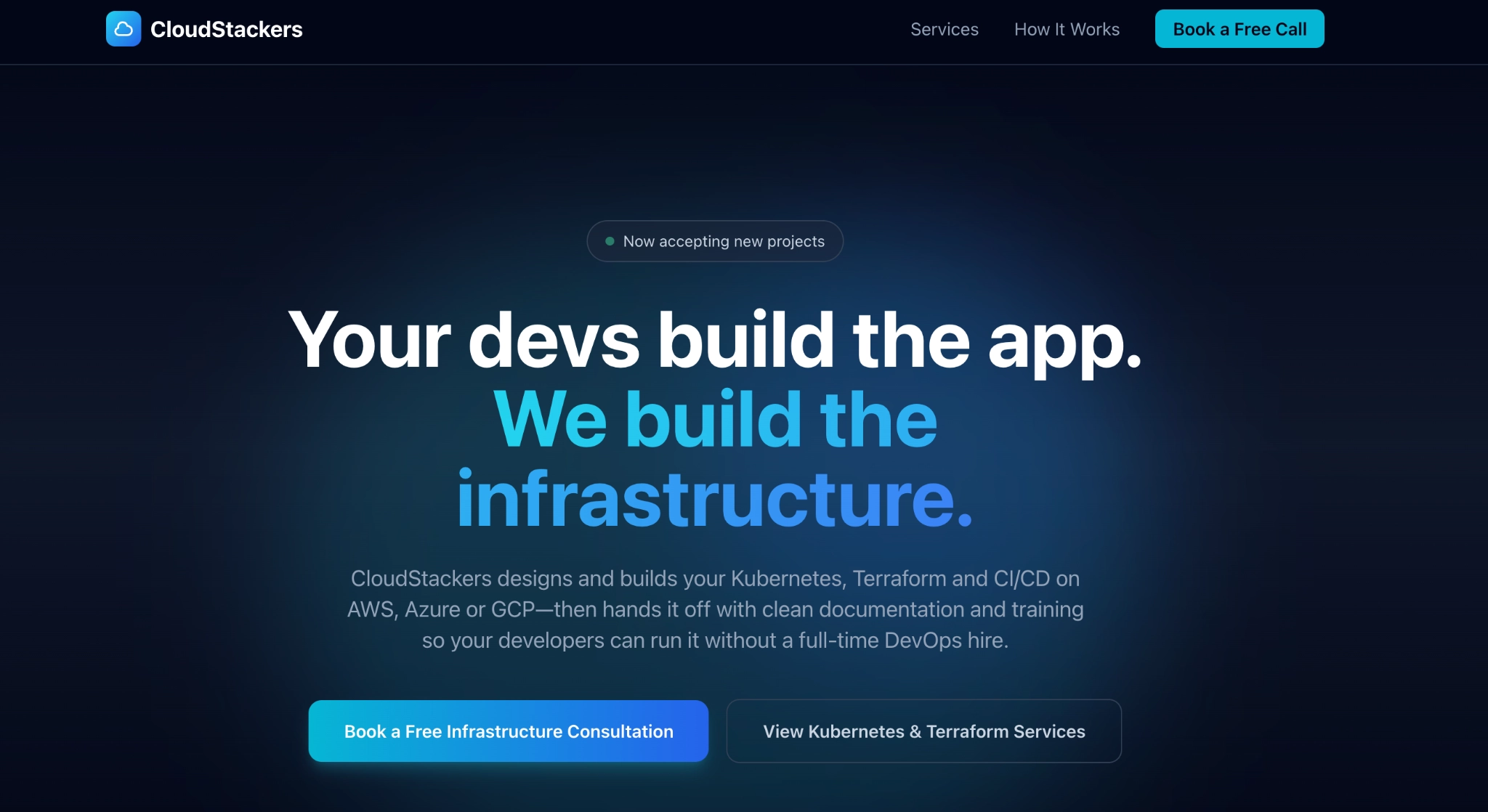
CloudStackers is a focused cloud infrastructure consultancy covering Kubernetes, Terraform, CI/CD, cloud architecture, and platform engineering across AWS, Azure, and GCP. Unlike providers that bundle consulting with long-term managed services, CloudStackers focuses on short, fixed-scope projects.
Its biggest strength is its handoff model. Its engineers join your team, implement the infrastructure, document it, train your developers, and then hand over control. Your team receives documentation, runbooks, and training, so you can continue operating and changing the infrastructure without keeping CloudStackers on retainer.
Where it may be less suitable: CloudStackers deliberately keeps its scope narrow. It also targets teams of roughly 5–100 engineers, so larger organizations seeking ongoing operations or a broader cloud partner may need another provider.
6. CodetoKloud
Best fit: Regulated companies that need AWS infrastructure automation with security and compliance built in.
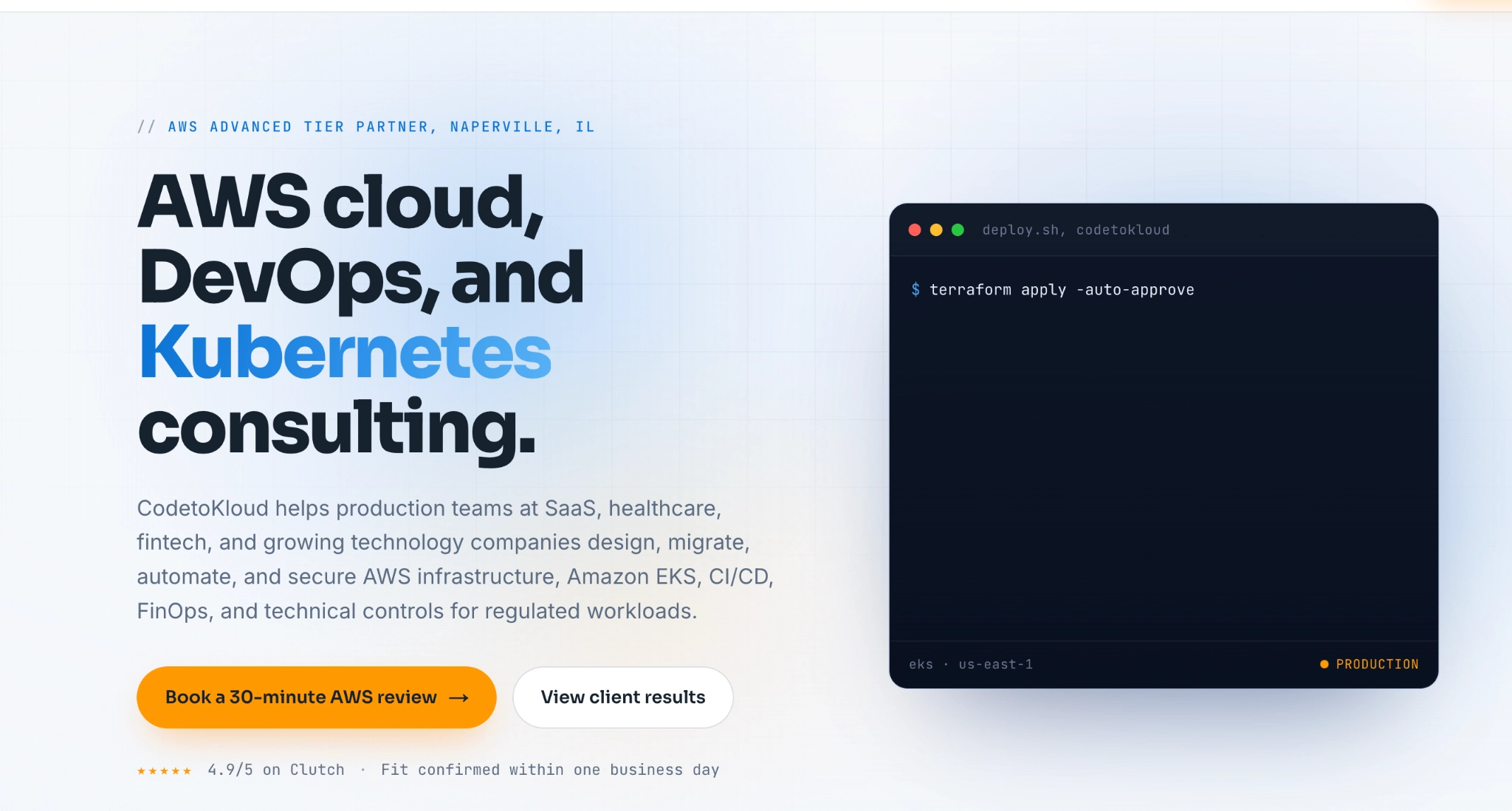
CodetoKloud is an AWS-focused consultancy covering DevOps, CI/CD, Kubernetes/EKS, infrastructure as code, cloud architecture, security, compliance, and FinOps. It works mainly with SaaS, healthcare, fintech, and other growing technology companies.
Its DevOps process focuses on automating the highest-value bottleneck first rather than rebuilding everything at once.
Additionally, CodetoKloud focuses exclusively on AWS and US-based clients. For regulated companies already committed to AWS, that means its architecture, automation, security, compliance, FinOps, and EKS services are all designed around the same cloud environment and operating requirements.
The company also hands off the infrastructure to your internal engineering teams, with documentation, diagrams, runbooks, access procedures, and operating guidance so your engineers can maintain it after delivery. CodetoKloud also offers ongoing platform support if the company prefers continued involvement.
Where it may be less suitable: CodetoKloud is strongly centered on AWS. That is useful if AWS, EKS, and related services are already central to your infrastructure, but it makes the company less suitable if you need a cloud-neutral provider or substantial Azure or GCP expertise.
7. SourceMash
Best fit: Enterprises wanting DevOps alongside ERP, CRM, and data work
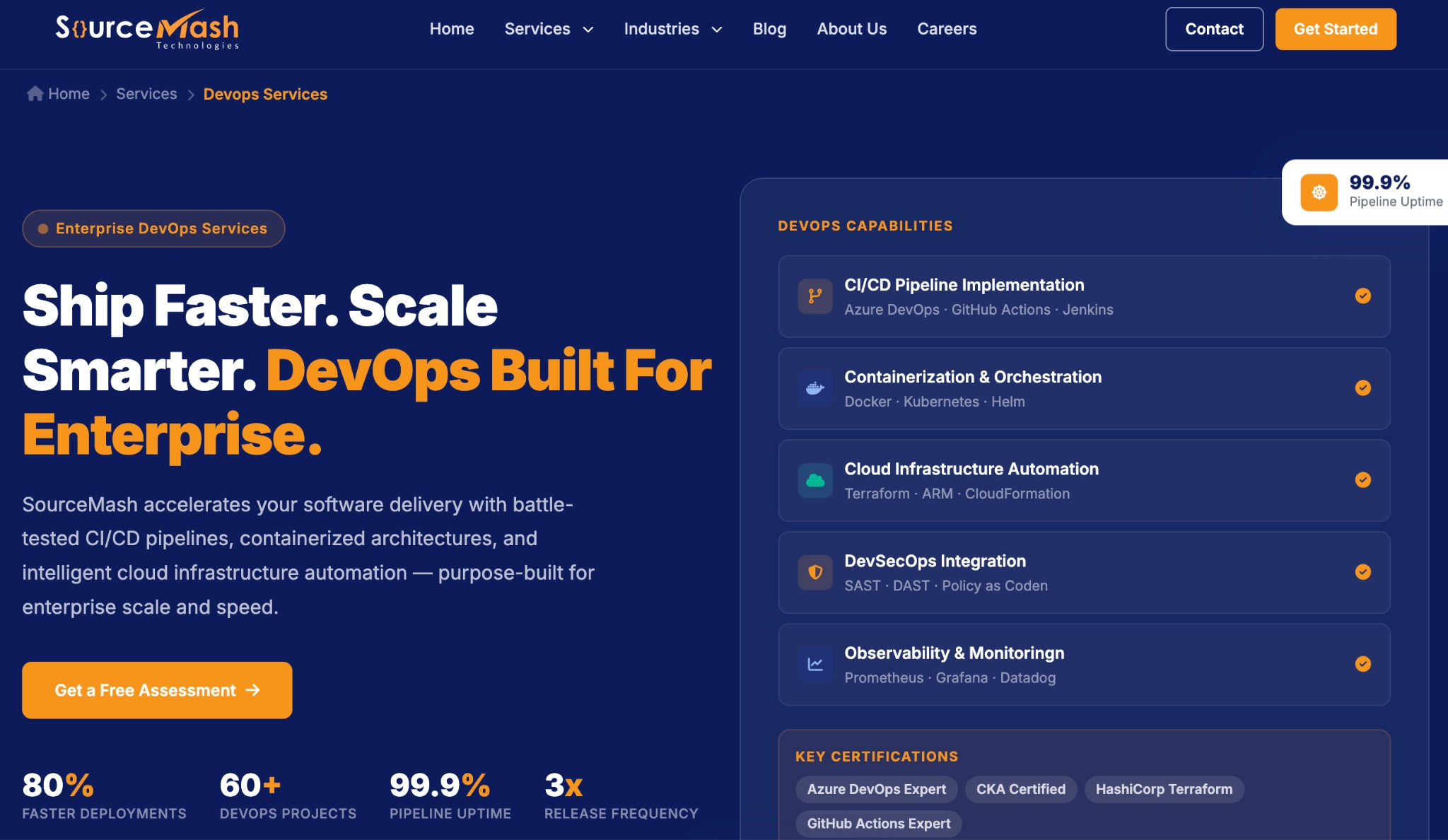
SourceMash provides DevOps and cloud infrastructure automation across CI/CD, Kubernetes, Infrastructure as Code, observability, and DevSecOps. It works across AWS, Azure, and GCP.
The company’s key strength is compliance automation. SourceMash can build requirements such as HIPAA, PCI-DSS, and CIS benchmarks into infrastructure templates and use policy-as-code to detect configuration changes that break those rules. This helps companies make infrastructure changes faster without weakening compliance.
SourceMash also provides training, runbooks, and ongoing managed support.
Where it may be less suitable: SourceMash is a broad enterprise technology provider. DevOps is only one part of its offering, alongside AI, ERP, CRM, cybersecurity, data, and IT services. If you want a consultancy focused almost entirely on cloud infrastructure automation, a more specialized provider may be a better fit.
How to choose the right cloud infrastructure automation service
When providers seem similar, it’s useful to parse them through a decision checklist that exposes the differences between each one and whether they are the right fit for your company. This involves looking beyond the tool stack they work with to scruitinizing key components that matter for your automation project’s success.
1. Decide whether you need diagnosis or implementation
First, and most importantly, determine how certain you are about the exact issue you need to resolve. In our experience, automating cloud infrastructure can end up as duct tape that struggles to hold together an infrastructure already on the brink of failure.
If you already know you need an EKS migration, Terraform modules, or a new CI/CD pipeline, a specialist who can implement that defined scope may be enough. But if the real problem is broader (e.g deployments are unreliable, cloud costs keep rising, or engineers spend too much time maintaining infrastructure), look for a provider that will assess the existing architecture and processes before recommending tools.
2. Find out who will make the important decisions
The success of a cloud infrastructure automation project rests on the expertise of the person making the strategic decisions and implementing them. Yet some providers involve senior engineers only during the sales conversation, then hand execution to junior engineers.
To avoid these providers, don't evaluate them based only on who joins the sales call. Ask who will actually design and build the system. Specifically, find out:
- Whether senior engineers stay involved during implementation;
- Who chooses the architecture and tools;
- Whether the provider can challenge a bad requirement;
- How much direction they expect from your internal team.
3. Compare outcomes
Case studies and reviews say more about a provider's capability than certifications and supported tools.
When reading case studies and reviews, pay close attention to the challenges at the start of the engagement and the approach the provider used to fix them. Give more weight to case studies where the company operates in your industry and is similar to your company.
4. Decide how much of the system you want to own
Some providers are designed to keep operating the infrastructure through managed DevOps, monitoring, incident response, and ongoing optimization. That makes sense if you don't want to build those capabilities internally.
Others build the system, document it, train your engineers, and hand over control. That is a better fit if your goal is to remove the infrastructure bottleneck without creating a permanent dependency on the provider.
Conclusion
The best cloud infrastructure automation service is not necessarily the one with the longest list of tools or certifications. It is the one that matches the kind of help your team actually needs.
If the architecture and scope are already clear, a specialist or execution-focused provider may be enough. If you need ongoing operational support, a managed DevOps provider makes more sense. But to avoid bigger issues later, it’s best to choose a provider who uses senior engineers to determine what to automate, where the real bottleneck is, and which changes will have the biggest impact.
Pelotech’s engineers assess the underlying problem before deciding what to automate, then design and build the solution with your team so you are not left with a more complex setup or a long-term dependency on the consultancy.
